Filling the seams
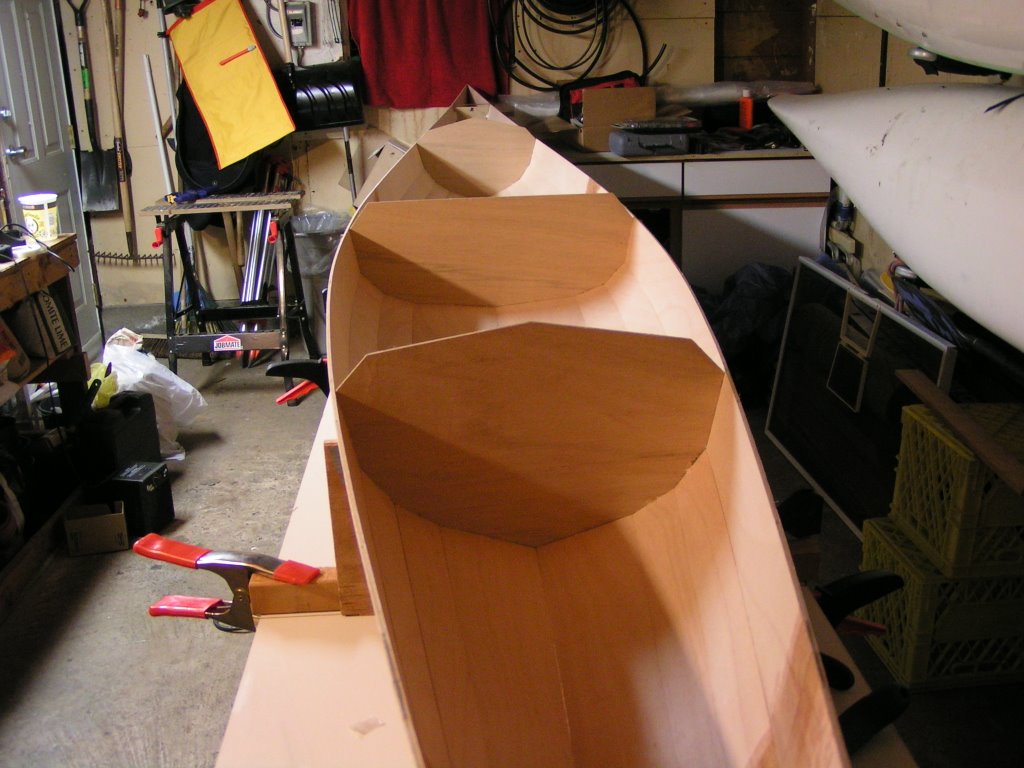
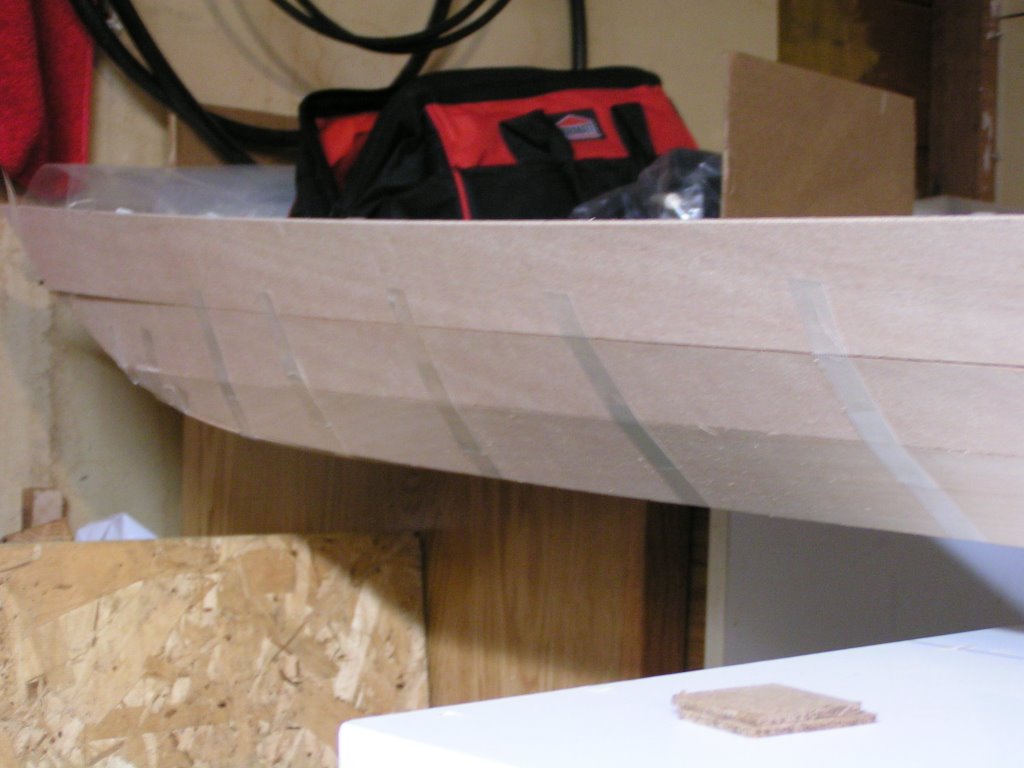
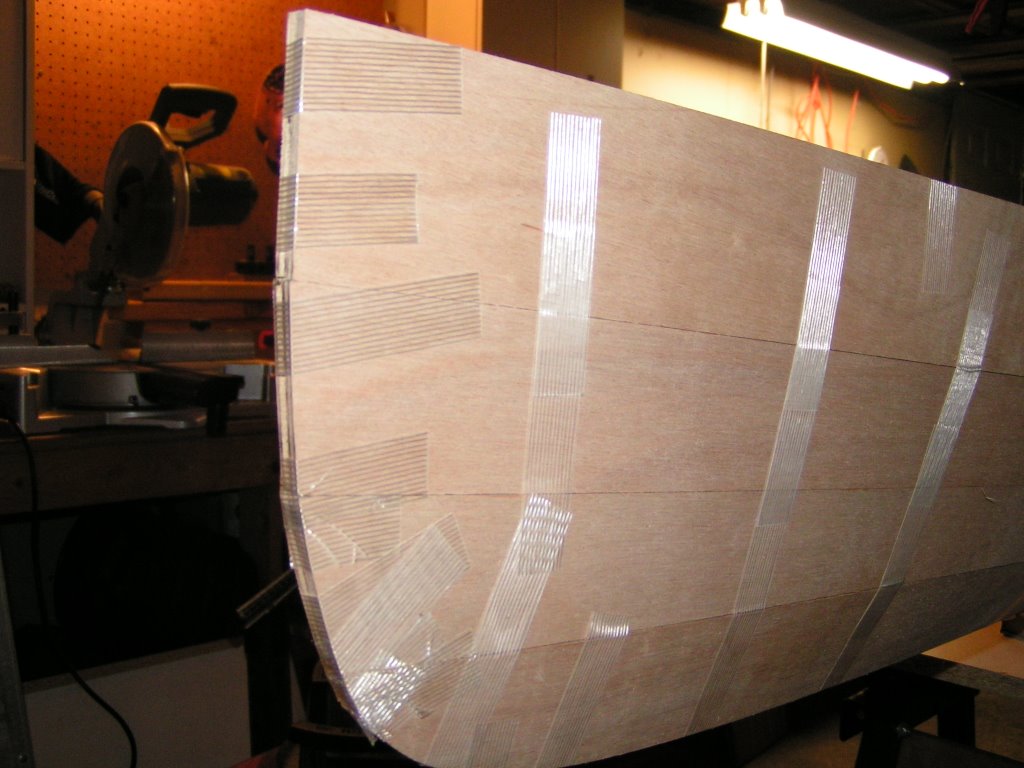
Before filling the seams on the hull, I decided to completely remove all the fiber tape that was holding the hull together. I thought this would save time because I could fill the seams all at once. In order to do this I 'spot-welded' the panels together using 5-minute epoxy and a pointed toothpick. This process took way too long and was much more trouble than it was worth. Next time I would glue the seams at the bow and stern together with 5-minute epoxy to stabilize the panels and allow me to remove all the tape there, but I would leave the rest of the tape in place. Filling the seams around the fiber tape would not be difficult and once that had cured the spaces where the tape was could then be filled. In the end I needed to fill some of the seams twice anyway. This was because the filler shrank when it dried and I wanted the filler to be flush with the surounding wood.
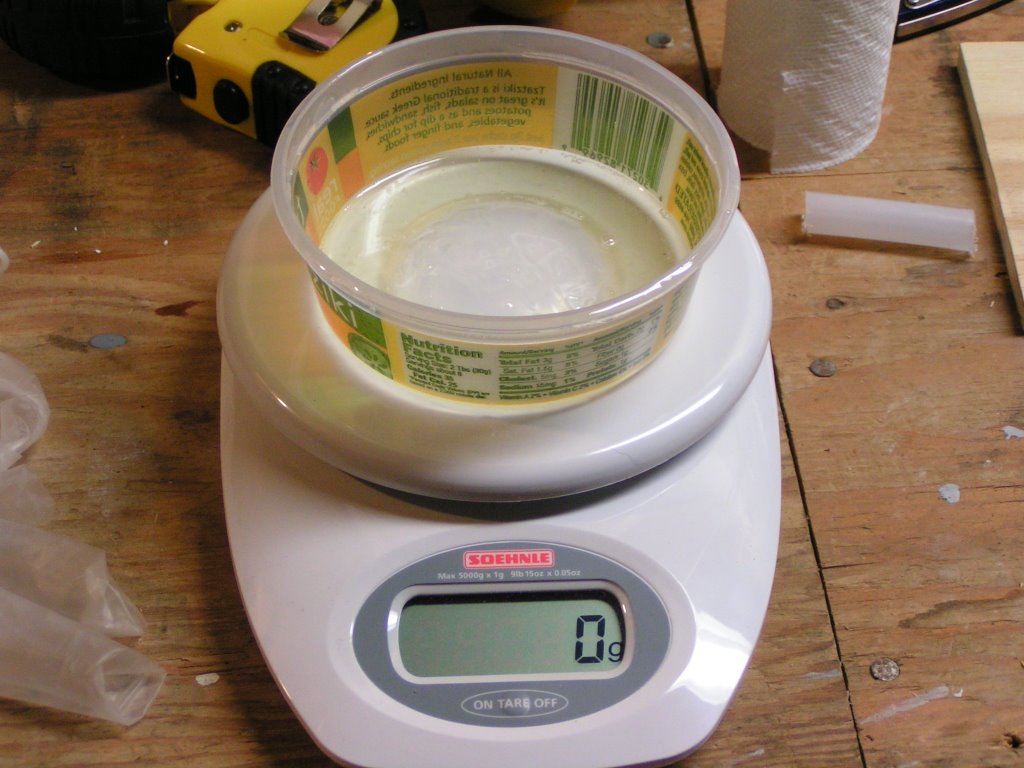
Instead of using the wood flour to make the filler for the seams, I decided to use a fairing compound from West System called 410 Microlight. The Microlight is much finer that the wood flour and can be added to create a mixture the consistency of thick peanut butter. This mixture was incredibly easy to work into the seams and had a long "working time" of more than 40 minutes. To apply the mixture, I masked each side of the seams with low-tack masking tape, being mindfull to keep the tape about 2mm from the seams edge so it did not pull the compound out the the seams when it was removed. I agressively worked the filler into the seams with a putty knife and then removed most of the excess. I would leave a bit more excess on top of the seams next time because the filler will shrink as it drys. This should save having to reapply more filler later. Any excess can easily be sanded off later, as the Microlight is much easier to sand then the wood flour mixture. It is a good idea to remove the masking tape as soon as possible so it does not become glued to the hull.
The only disadvantage of the Microlight is the colour. It is light tan and will stand out against the epoxy-saturated wood. Personally, I liked the look at it highlighted the panels. You might be able to match the colour to the wood better if some wood flour was added, but this will make the filler harder to sand.
posted by Mark Ware @ 1:53 PM
2 comments